THE CULT OF SAMENESS: HOW MIDWESTERN MEDIA AND THE LAND IT REFLECTS ARE QUIETLY ABANDONING THE DIFFERENT CLASS

Words: Mathew W. Swenson
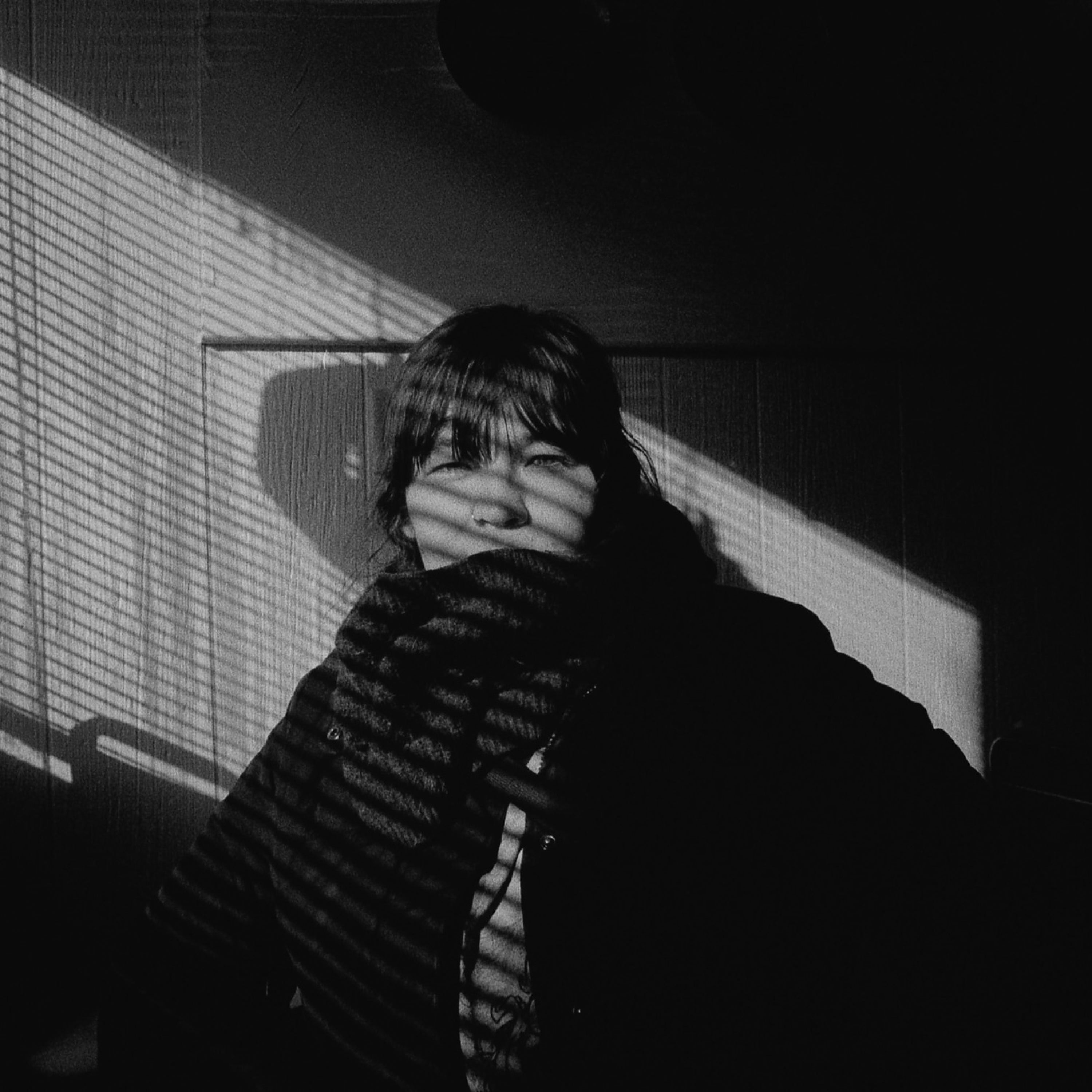
Imagery: Elena Stanton
Model/Stylist: Mariah McCabe
When the Minnesota Star Tribune announced its relaunch in the summer of 2024, it framed the move as a bold evolution: a new digital identity, a modern logo, and a promise to be “the heart and voice of the North.” But in its new editorial structure (News & Politics, Business, Sports, Food & Culture, and Outdoors) something crucial seems to have disappeared.
Design, interiors, architecture, fashion, and style have been quietly left behind.
To many, that may sound like a small omission, but to anyone who understands how a region defines itself (visually, spatially, and imaginatively) it is quite revealing. It marks a moment when Minnesota’s largest publication decided that pushing creativity no longer belongs to civic life, and that aesthetics are optional (or very watered down), and that the designers, artists, and makers that push boundaries, and inspire our more curious side no longer merit coverage.

A Slowly Disappearing Beat
For decades, the Star Tribune’s Home + Garden pages were a record of the region’s design intelligence: hand-built lake homes, innovative studios, ceramics and furniture that sometimes translated a northern design vernacular. These weren’t just lifestyle stories; they were cultural documentation and proof that "The North" possessed its own visual and material vocabulary.
Today, that coverage has thinned to retail roundups (and closures) and shopping tips for mothers of the bride. Design has been reframed as consumer advice rather than cultural reporting. What was once a conversation about meaning and place has become a never ending list for how to consume, and at worse to only buy the most mediocre.
The hollowing-out didn’t happen overnight. It (sorta) started when the Star Tribune acquired City Pages the Twin Cities’ long-running alternative weekly known for giving space to the artists, musicians, writers, and designers who defined local culture. It had the opportunity to fold that energy into its own ecosystem (plus pick up a younger audience). Instead, it extinguished it. Within months, City Pages was shuttered, its staff dispersed, and the city’s most vital platform for creative critique and subcultural coverage was simply gone.
That closure wasn’t just the death of a publication. It was the silencing of a civic counterpoint. The voice that chronicled the underground, the experimental, the unapologetically "different". In swallowing City Pages only to snuff it out, the Star Tribune absorbed an audience it didn’t understand and then erased the creative world that audience represented.
This is not just an editorial decision, it’s a philosophical one. And it mirrors a larger regional pattern I have witnessed since moving back from the coasts in 2018 and reminds me of my childhood here...a growing comfort with sameness, an allergy to difference.
“What disappears when different voices disappear from coverage isn’t just exposure—it’s context. We lose the record of how this place actually looks, feels, and imagines itself. Without that mirror, Minnesota becomes invisible to itself.” Emma Beatrez, artist


The Fear of Standing Out in the Midwest
Across the Midwest, and especially in Minnesota, there’s a longstanding unease with creative distinction. To design too boldly, dress too expressively, or think too unconventionally is to violate an unspoken rule of social equilibrium. The result is a cultural landscape that rewards politeness over vision.
Nowhere is that more visible than in the Twin Cities themselves. Cities whose urban voice is being tuned out in exchange for the borrowed accent of the western suburbs and its wealthy patrons. MSP Magazine has become fluent in the language of comfort: entire issues dedicated to the Best Burgers across the metro, fashion advice that begins and ends with equestrian or nautical clichés, and an unbroken landscape of big, beige homes spreading around the lakes like a polite contagion.
This suburban tone has crept into every corner of the region’s media. The same aesthetic now dominates real estate pages, lifestyle coverage, and local advertising—safe, aspirational, and interchangeable. The cities that once produced Prince, Walker Art Center design culture, and an independent music and art scene that set national standards now seem content to imitate their own moderation.
What emerges is a civic aesthetic of caution: a culture that wants to be known for creativity but fears the discomfort it brings.
There’s a strain of thought that wants to seal the borders. That insists we don’t need outside validation to define who we are. As MSP Magazine’s Stephanie March writes, “Maybe I’m just not a fan of looking to outside sources for validation of our food scene… Recognition is important for the big picture and future health of the Twin Cities. But I worry about the obsession with pleasing occasional visitors on an evaluative mission over those who are there, more often, to eat joyously.”
It’s a fair concern, but it’s also the kind of comfort that keeps a scene small. The fear of the “outsider’s eye” is the same instinct that breeds sameness. Because what’s really at stake isn’t validation...it’s dialogue. The outside gaze, however flawed, forces a reckoning. It pressures the work to hold up, not just to itself, but to the world. Without that friction, we end up with culture that’s closed-loop. Endlessly reassuring, rarely evolving.
This retreat from a particular type of coverage isn’t an anomaly but a mirror. It reflects a region uncomfortable with difference, increasingly suspicious of anything that challenges its visual or intellectual equilibrium.

“The midwest loves to talk about community, but community without difference is just conformity. The people making new language, new form, new beauty—they’re not fringe. They’re the future.” Cym Warkov, Ceramist
The Different Class
But beneath that surface lies another cultural current, one that refuses to disappear. Let's call it the Different Class: a ecosystem of artists, designers, curators, and makers, who insist on making things that don’t always fit in to the status.
This Different Class isn’t defined by family name, income or title. It’s defined by temperament. It’s the ceramicist in North Minneapolis shaping feeling into form; the painter that is shifting the lens on cheerleaders; object designer in Stillwater pushing textiles into experiences; the artist changing perception of the roadside attraction; the regenerative farmer on the SD border reframing what the farm means to the city.
In Twin Cities Business (TSB) X Editor Allison Kaplan (New Innovation Director for the Star Tribune) calls for revival reads like a familiar civic pep talk: committees, task forces, and “calling in all possible lifelines.” But her lifelines are all the usual suspects: the big names, the safe bets, the brands already stamped with approval. As she writes, “The new committee is once again stacked with many of the same downtown stakeholders who’ve been stymied by the lack of momentum for years.” Yet she goes on to summon those same figures... MartinPatrick3, Blu Dot, and Evereve, as if rearranging the same pieces will produce a different picture.
This is the Midwest’s feedback loop: beige progress dressed as innovation. The people being asked to “revive” downtown are the ones who helped flatten it into a showroom of consensus taste. What’s missing isn’t more business leadership but rather the risk, friction, and investment in the deep creativity that happens off the grid, below the boardroom table. Until the city funds experimentation instead of experience design, we’ll keep asking the same people for new ideas they no longer have.
The alternative voices are the ones who keep boredom and mediocrity at bay. They create friction where there would otherwise be consensus. They remind us that culture isn’t supposed to be comfortable at all times...it might need to get a little uncomfortable.
Without empowering (and funding) this "Different Class" the region becomes visually dull, spiritually quiet, and intellectually stagnant.
Journalism as Mirror
The Star Tribune’s decision to sideline design coverage reveals a dangerous misconception: that readers here don’t care about aesthetics, but is clearly not true. Young readers, in particular, live all over the social mediascape in a constant hunt for whats cool and different. They curate their worlds daily through interiors, fashion, photography, digital aesthetics, and the ethics of how things are made and by whom.
Design is the language of how people live now, but to ignore it is to declare irrelevance to an entire generation, but is it that our regional media simply feels irrelevant to cover these categories?
But by removing creative coverage from its structure, the paper narrows its understanding of culture to what can be quantified (politics, business, and sports) while ignoring the invisible architecture of meaning that makes those things matter. The loss is not just aesthetic. It’s intellectual.
"As artists, our work seeks to interrogate the systems we inherit and the roles we play within them. The onus is on us to self-determine our future. Though we have more questions than answers, what we know for certain is that we need rooms that give artists the freedom to wander, collapse existing paradigms, and reshape how we relate to the world." - Ubah “Riiyo” Abdullahi and Taoheed Bayo of Artropolis
Story as Economy
What regional media seems to have forgotten is that journalism isn’t only about reporting, but it is also about building economies. Coverage creates visibility; visibility drives opportunity; opportunity sustains the creative class and connects them to audiences that need to live. When you tell stories about local designers, architects, and makers, you don’t just celebrate their work, but you also help circulate their story into the marketplace of attention and investment.
Design coverage is economic infrastructure. It connects ideas to clients, studios to commissions, and talent to recognition. When a publication stops writing about design, it doesn’t just shrink a section it weakens an entire ecosystem.
And so Minnesota’s creative community finds itself exporting its stories to national and niche global publications (publications I work with regularly) like Architectural Digest, Wallpaper, iD, Dezeen) to find audience and legitimacy, while back home, the gatekeepers keep the doors locked. The irony is stunning: the most innovative work produced in this region must leave the land it was born in to be seen. The publications that should be building these economies are instead ignoring them.

"We used to want to stand out, we wanted to declare our identity on a large scale...we were desperate to declare our identity. We found ourselves interesting and others interesting and we wanted to talk about it. I’m not sure what Minnesota finds interesting anymore,
but we can always find our interest again." - Katherine Goertz, Art Historian
The Call
Every healthy culture depends on its Different Class. The people who question, distort, and reimagine the land around us. They are not peripheral to civic life; they are its pulse. They build the world we eventually take for granted. They make the future visible before the rest of us can see it.
The creative class doesn’t need regional media to validate it, but the region needs the "Different Class" to survive, to keep it from sinking into its own comfort, to protect it from the dullness of consensus.
It’s time to stop apologizing for difference and start defending it. Because mediocrity is not a virtue. It’s the quiet death of imagination.
Until our institutions, newspapers, and audiences learn to value the class of people, regional media will continue to describe a Minnesota that looks familiar, feels safe and says nothing new.
There’s so much more than what is given a spotlight, which is maybe obvious, but theres a tendency to regurgitate a simple caricature of the arts and how to politely consume supporting the arts. I’m just bored because the closed loop regurgitation is just reinforcing a homogeneous aesthetic experience.
- Joshua McGarvey, Artist

MATHEW W SWENSON
EDITORIAL
Mathew Swenson is a seasoned brand strategist, creative director, and founder of TELL, a platform that explores the intersection of creativity, culture, and Midwestern identity. With over 20 years of experience, Mathew has worked with clients including Estee Lauder, Levi’s, Everlane, COS, Everybody.world, American Apparel, Standard Hotel, William Eggleston, Prospect Refuge and Hennepin Made. His unique ability to craft compelling narratives and bold visual identities has helped shape brands across fashion, home, and culture.
Get In Touch