THE FOGNET: WHAT WE LOST WHEN CONNECTION BECAME CONTENT

Words: Michael Cina
Imagery: Elena Stanton
Editor: Mathew W. Swenson
You can feel when a conversation has energy. Two people pay attention. An intangible electricity moves between them, carrying more than legible words. I keep coming back to that feeling when I think about what we call social media.


I was lucky enough to watch the internet take shape. When I was a kid, my parents had a friend whose son was confined to a wheelchair. He showed me the early web in the 1980s on a green-lit CRT monitor, the phone flipped upside down on the cradle. I logged back on in 1995 and found what felt like small villages. Tight communities trading ideas and building things together. I joined one of the first online design circles. We knew each other by name, shared files, and helped one another through forums, IRC channels, newsgroups, and instant messages.
Then came indexing, which made it easier to find one another, and Macromedia Flash, which gave us blank canvases to build strange, animated worlds. Creativity felt infinite until commercialization and e-commerce arrived, followed by the quiet death of Flash at the hands of Steve Jobs. The open web we built was slowly paved over. Mobile apps came next, then feeds and like counts. Now visibility costs money, and the noise is constant.
Creativity felt infinite until commercialization and e-commerce arrived, followed by the quiet death of Flash at the hands of Steve Jobs.
What interests me are the conditions beneath those stories, the hidden structures that decide what is seen, who is heard, and how value gets assigned. These systems are not neutral. They guide our behavior through the way platforms are built and, more powerfully, through algorithms that reward certain actions and suppress others. They train us to treat connection like performance and attention like a prompt, pressuring us to adjust ourselves to stay visible. Speed, certainty, and spectacle rise because they’re easy to register. Patience, nuance, and care fade because they move slowly and resist measurement.
Ask yourself: What kinds of attention do these systems foster? What kinds of presence do they erode? What do they allow to grow and what do they prevent from taking root? The answers reveal not only what we’ve lost, but what we might still rebuild if we step outside the logic that shaped these tools, which ultimately shape us.
social media, lowercase, is older and broader. It’s the exchange of signals, stories, and meaning between people without metrics or mediation.
There’s a distinction that keeps me oriented. Social Media (with capitals) is the industry layer: platforms, metrics, and algorithms that turn everyone into both audience and broadcaster. It’s an economy of visibility, tuned for engagement and scale. social media, lowercase, is older and broader. It’s the exchange of signals, stories, and meaning between people without metrics or mediation. It can live anywhere communication carries intent: a conversation, a shirt, an essay, an image, an event. Lowercase social media is not a product. It’s a lived practice.
The bright surface of the clearnet (the public web built for exposure) values what can be counted and sold over what can simply be felt. Controversy rises because it provokes reaction, and reaction gets mistaken for meaning. Nuance disappears. Structures designed to accelerate content also compress it, reducing complexity into familiar, repeatable patterns. Everything begins to look and sound the same. Pattern recognition keeps the machine running, but it rewards familiarity over risk. Culture, however, needs friction and slow time to shape conditions the clearnet has largely erased.

What disappears in that flood of light are the smaller spaces where difference can breathe. Subcultures need fog and room to build their own language, test ideas, and form trust. Meaning grows through invested use, difference, and shared narratives.
“Feeds” tuned for exposure pull every signal into “engines” that flatten it into measurable data. When something real surfaces, it spreads before it has time to anchor. Context collapses, and locally shared meanings fail to hold. Even rebellion gets absorbed as engagement, translated into metrics, and returned as content. Once something can be measured by the system, it stops resisting and starts feeding it.
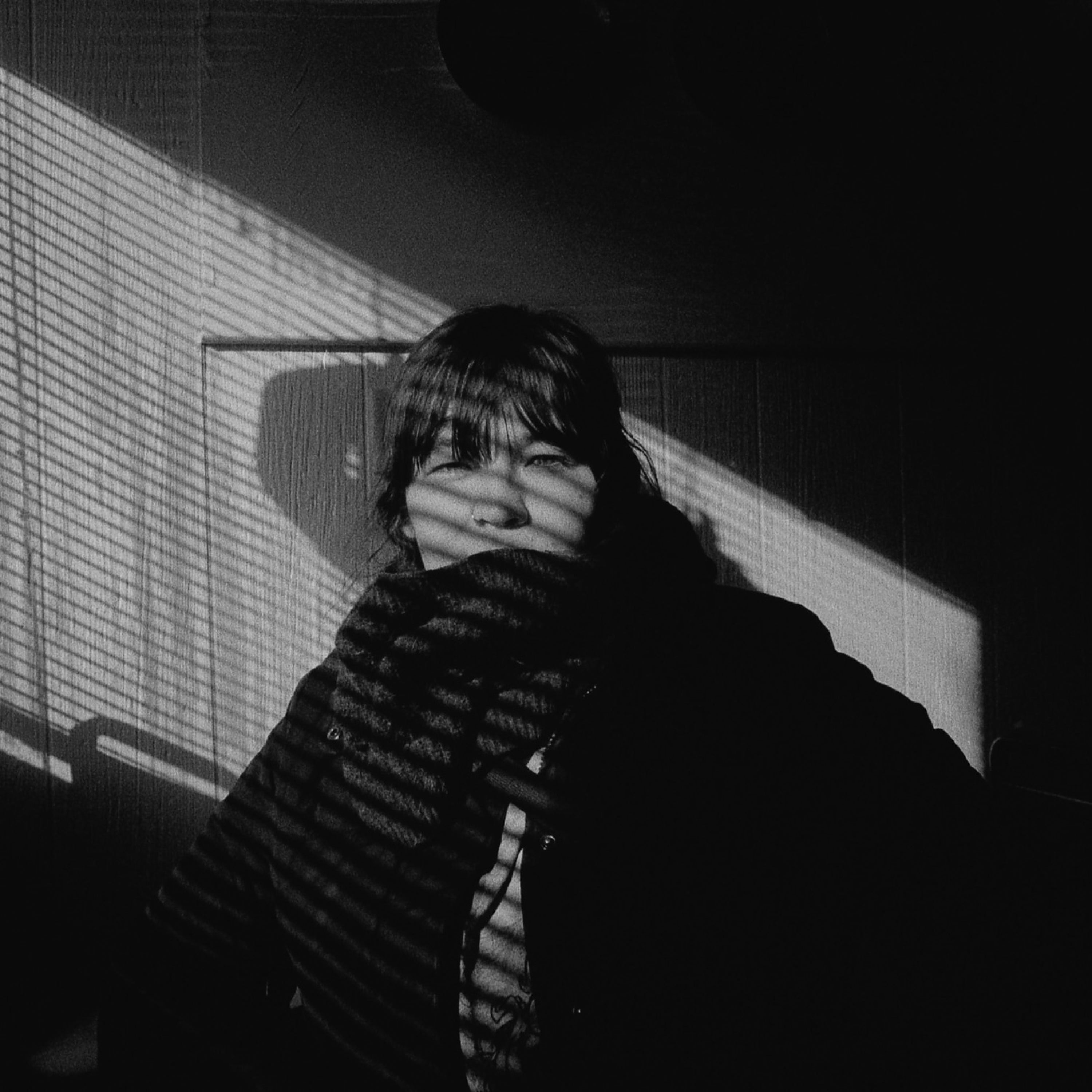
If the clearnet is built for exposure, fognet offers a different scale entirely. A network of human-sized spaces where texture develops at the pace of real conversation. Some exist online: group chats, small servers, private rooms. Others are physical: studios, kitchen tables, back rooms where people gather week after week. This isn’t about secrecy. It’s about proportion. Spaces that match the limits of human attention. Within that scale, meaning can take shape slowly before it hardens into a product or trend.
Fognet sets a natural pace where context, trust, and depth can accumulate instead of being stripped away. It values rhythm over reach and presence over performance. The fog isn’t confusion but rather an atmosphere where ideas can stay unsharpened long enough to grow, porous enough to shift and mature before they’re seen. In that opacity, culture becomes less about production and more about relation.
What he called social sculpture. The materials aren’t just paint and stone, but time, teaching, conversation, and care. Everyone participates in shaping the social form.

Here Joseph Beuys becomes useful. He argued that society itself is a work of art shaped through human action. What he called social sculpture. The materials aren’t just paint and stone, but time, teaching, conversation, and care. Everyone participates in shaping the social form.
Marshall McLuhan extended this into the technological realm. “The medium is the message” reminds us that tools reshape not just content, but the people using them. Every medium reorganizes how we see, think, and behave.
Together, Beuys and McLuhan make something clear: networks aren’t neutral containers. They sculpt attention, values, and relationships. The question isn’t whether we’re shaping them but what kinds of relationships their structures allow to grow, and which ones they quietly wear away.
Seen this way, fognet becomes a social sculpture built at human scale. Its materials are presence, trust, and rhythm. Its form is collective and unfinished. You can design the framework, but you can’t control what emerges. The work is creating conditions where attention isn’t extracted and nuance has time to grow. Protecting context, allowing decay and renewal, resisting the urge to optimize everything into a commodity.
In a fognet, information moves like weather. It drifts, gathers, disperses. The value lives in what can’t be indexed easily: tone, timing, trust, care.
This isn’t exotic. A fognet limits how far a signal travels. It chooses proximity over broadcast. Interfaces are quieter, organized around circles of trust rather than infinite feeds. Success is depth of exchange, not size of audience. Entry might require an invitation, a shared task, or showing up in person just enough friction to turn presence into participation. Some things organically decay. Not everything is archived.
In a fognet, information moves like weather. It drifts, gathers, disperses. The value lives in what can’t be indexed easily: tone, timing, trust, care. These qualities sound soft until you try to build without them and then you realize they are the structure.
Change the altitude and the idea becomes obvious. From feeds to faces. From screens to streets; social media isn’t something that happens online it’s a pattern of exchange between people. The apps sit on top of that. Every conversation, object, and gathering is already part of the network. The choice is whether we design for exposure or for belonging.
The future I want is more human and less frantic. Softer signals. More engaged audiences. A little more fog…not to hide, but to protect depth and process. If Social Media is the industry, then social media is a practice we can still steward. The work is making spaces where trust can form and ideas can develop before being pushed into performance. Networks of care grow quietly, at their own pace, and come into view only when they’re ready.
That’s social sculpture at the scale of a life. Shaped through attention, proportion, and intention. It isn’t complicated. It’s an intentional choice we make, starting with how we connect.

BY MICHEAL CINA
Michael Cina is a designer, creative director, and co-founder of TELL, a platform exploring the intersection of creativity, culture, and Midwestern identity. With a career spanning over two decades, Michael has worked with clients including Google, Aesop, Target, and Lexus, bringing a unique design perspective to branding, visual storytelling, and spatial experiences.
Before co-founding TELL, Michael led his own studio, Cina Associates, where he developed identities, publications, and experiential projects that challenge conventions and elevate overlooked voices. At TELL, he continues to shape narratives that highlight the unseen, the underappreciated, and the surprisingly delightful corners of Midwestern creativity.